(Summary) Botanical Imperialism in Modern China: Plant Hunters in Yunnan and the Entangled History of Rhododendrons
Abstract
This study examines Western plant hunting in Yunnan (late 19th to early 20th century) through the lens of rhododendrons. Using histoire croisée, it traces how plant hunters, from missionary collectors to professional naturalists like George Forrest, operated within imperial networks, extracted vast quantities of specimens, and left lasting ecological consequences. It also weighs the controversial legacy of plant hunting: imperial exploitation on one hand, and the catalyst for modern Chinese botany on the other.
1. Introduction
A 19th-century "Yunnan Myth" about the province's commercial wealth drew Western powers into China's southwest. Plant hunting, though framed as pure science, became entangled with railway surveys, trade investigations, and intelligence work. Protected by unequal treaties, Western scientific expeditions operated as part of an "informal empire" of knowledge production. Meanwhile, the European craze for exotic plants, especially rhododendrons, which could thrive in Britain's climate, drove hunters toward Yunnan's highlands.
2. From Missionaries to Naturalists
The first systematic collectors were missionaries, not botanists. Père Jean-Marie Delavay (1834–1895) spent 14 years in Yunnan and sent over 200,000 specimens to Paris, collaborating with taxonomist Adrien Franchet. By century's end, collecting shifted from missionary amateurs to professionals sponsored by botanical gardens and commercial nurseries. Robert Fortune famously smuggled tea from China to India; later figures like Ernest H. Wilson and Joseph F. Rock turned collecting into large-scale, institutionally backed "hunting."
3. George Forrest and the "King of Rhododendron"
George Forrest (1873-1932), sponsored by the Royal Botanic Garden Edinburgh, undertook seven expeditions to Yunnan, collecting over 31,000 specimens. Unlike lone missionaries, he employed a team of local assistants and kept detailed field records that formed a "paper road" from Yunnan to Edinburgh; a knowledge pipeline that marginalized local naming traditions.
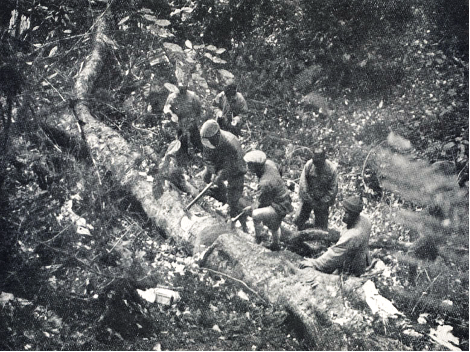
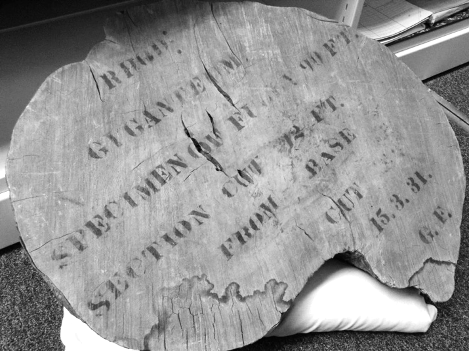
In 1919, Forrest discovered a rhododendron tree over 25 m tall and centuries old in the Gaoligong Mountains. He cut it down and shipped a trunk section to Edinburgh; an act celebrated then as science, now seen as ecological destruction.
Using technical tools like Wardian cases, Forrest shipped vast numbers of living plants to Britain. Some introduced species, like Rhododendron ponticum, later became invasive, transforming from welcomed "exotics" into ecological threats on both sides of the exchange.
4. Investigation or Plunder?
Western narratives celebrate plant hunters as heroic explorers; Chinese accounts condemn them as plunderers exploiting unequal treaties. The reality is layered. Their methods were extractive and they monopolized scientific discourse, yet their collections enriched global botanical knowledge and spurred Chinese botanists like Zhong Guanguang, Hu Xiansu, and Chen Huanyong to build their own institutions and reclaim scientific authority over China's flora.
Conclusion: Botanical Imperialism in China?
The rhododendron's journey exemplifies "botanical imperialism": imperial powers systematically extracted and commercialized botanical resources through networks of gardens, hunters, and taxonomy. The Linnaean system replaced Chinese ways of knowing plants, a "linguistic imperialism" in which Europeans held the power to name. Yet this encounter also sparked global knowledge exchange and the rise of modern Chinese botany. The legacy is an entangled history of exploitation and unintended consequence.
Selected References
Fan, F.-T. (2003). Victorian naturalists in China: Science and informal empire. The British Journal for the History of Science, 36(1), 1–26.
Keogh, L. (2020). The Wardian case: How a simple box moved plants and changed the world. University of Chicago Press.
McLean, B. (2004). George Forrest: Plant hunter. Antique Collectors' Club.
Mueggler, E. (2011). The paper road: Archive and experience in the botanical exploration of West China and Tibet. University of California Press.
Schiebinger, L. (2004). Plants and empire: Colonial bioprospecting in the Atlantic world. Harvard University Press.